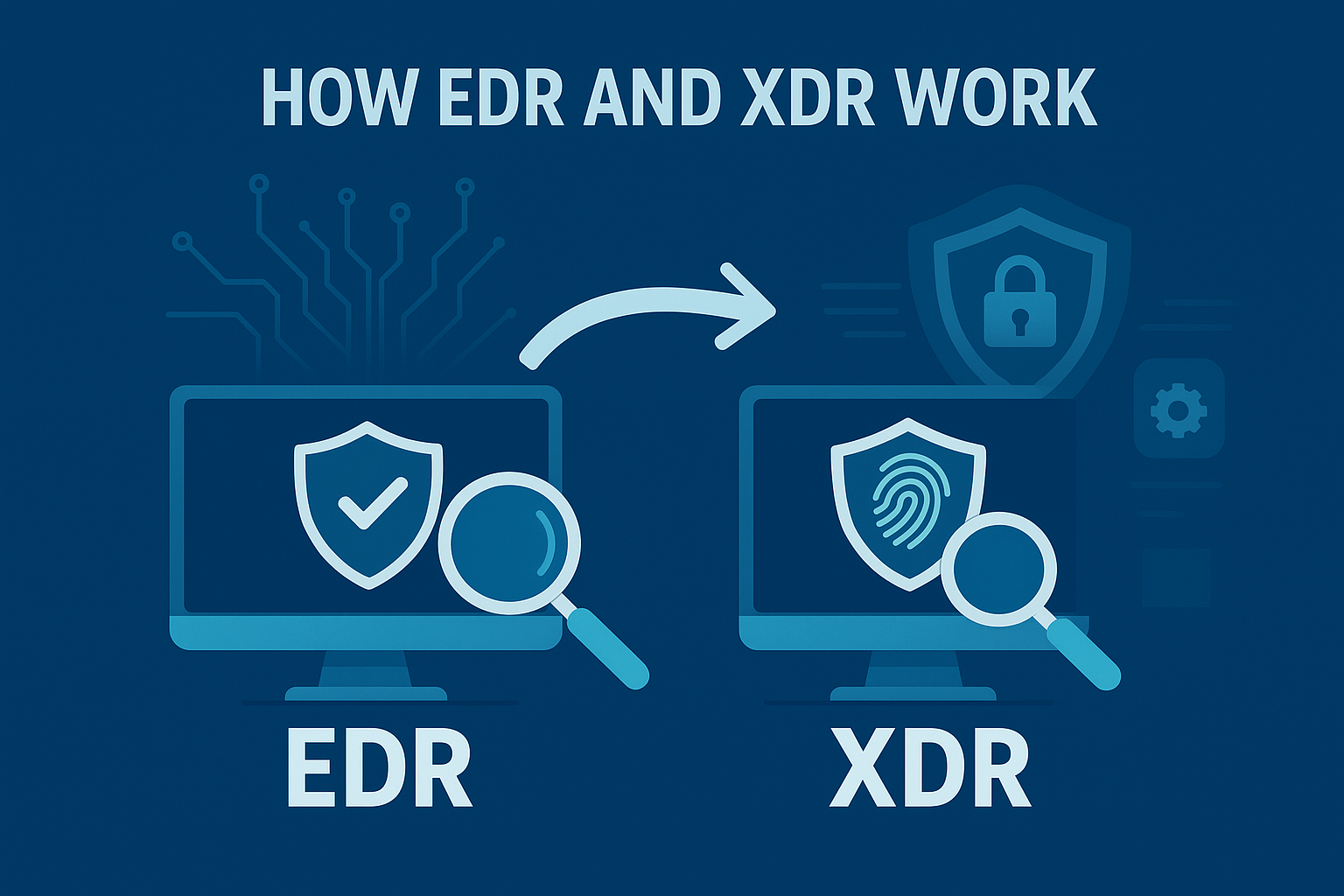
Cyberattacks are becoming more advanced every day, making traditional antivirus tools insufficient to defend organizations. Businesses need smarter solutions that not only detect threats but also respond quickly. This is where EDR (Endpoint Detection and Response) and XDR (Extended Detection and Response) come in. Both are modern security technologies designed to monitor, detect, and mitigate cyber risks, but they operate at different levels.
What is EDR?
Endpoint Detection and Response (EDR) focuses on protecting endpoints like laptops, desktops, and mobile devices. Since endpoints are the most common entry points for cyberattacks, EDR continuously monitors them to identify suspicious activity.
How EDR Works:
- Continuous Monitoring – EDR tools track activities on endpoints, such as file changes, logins, and application behavior.
- Threat Detection – Using machine learning and behavior analytics, EDR identifies unusual or malicious activity.
- Incident Investigation – When a potential threat is detected, EDR provides detailed insights into how the attack started and spread.
- Automated Response – EDR can isolate infected devices, block harmful processes, or remove malicious files automatically.
Example: If ransomware tries to encrypt files on an employee's laptop, EDR can quickly stop the process and prevent further damage.
What is XDR?
Extended Detection and Response (XDR) is the next level of cybersecurity that goes beyond endpoints. It integrates data from multiple sources like endpoints, servers, cloud applications, and networks. This holistic view allows security teams to detect threats that may move across different layers of the IT environment.
How XDR Works:
- Data Collection Across Systems – XDR gathers data not just from endpoints but also from emails, cloud services, and networks.
- Centralized Analysis – All data is analyzed in one platform, giving a complete view of possible attacks.
- Correlation of Events – XDR connects different security events to identify complex attacks that would be missed by isolated tools.
- Automated Threat Response – XDR can block malicious emails, isolate devices, and stop suspicious network traffic in real time.
Example: If a hacker sends a phishing email, steals login credentials, and then tries to access cloud storage, XDR can connect all these events and shut down the attack.
Why Businesses Need Them
- EDR is ideal for organizations that want strong protection for employee devices.
- XDR is better for businesses with complex IT environments where threats can spread across multiple systems.
Together, they create a powerful defense strategy against modern cyberattacks.
Conclusion
Cybersecurity threats are evolving, and businesses in every industry need proactive defenses. EDR protects endpoints, while XDR provides a broader, unified defense across networks, cloud, and applications. By adopting these technologies, organizations can improve detection, reduce response time, and strengthen overall security.